Demna’s second Gucci collection arrived in Milan bearing the central question of his tenure: can a house built on heritage absorb a designer whose instinct is disruption? The answer, on this evidence, is a work-in-progress that may finally be cohering.
The show opened on silhouettes that fused the house’s archival codes — the horsebit, the polished loafer, the double-G — with Demna’s signature volume and technical sportswear fluency. The result was a tension that never fully collapsed into either extreme.
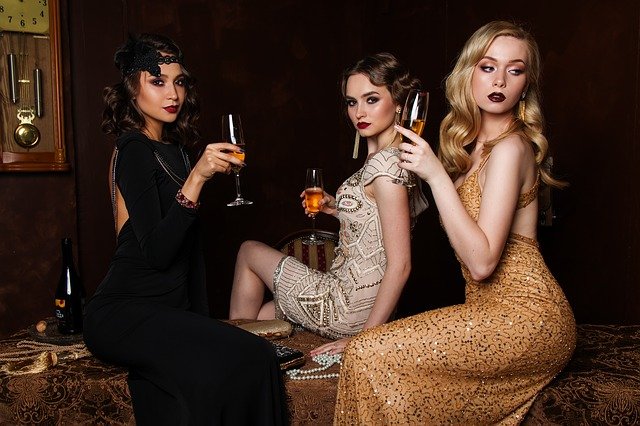
Tailoring came overblown and slouched, cut with a boxy ease that deflated Florence’s usual rigidity, while evening looks leaned into the sequinned maximalism that Gucci has long owned. Between them sat the designer’s gift for the unexpected garment: pieces that read as armor from a future the house has not yet described.
The commercial read is delicate. Much of Gucci’s rebound depends on returning to the recognizable desirability of the blended-gender, logomaniac era, and Demna’s instinct to defamiliarize works against that muscle memory even as it generates attention.
The brand’s recent sales have stabilized around cautious optimism, recovering from a painful reset that began when the previous creative chapter lost momentum. Analysts now treat each Demna show as a referendum on whether the label can be both avant-garde and broadly wanted.
The honest verdict is that the identity crisis is not solved so much as productively deferred. Gucci has found a designer willing to hold its contradictions in one hand, and for a house of its scale, that may be enough for now.