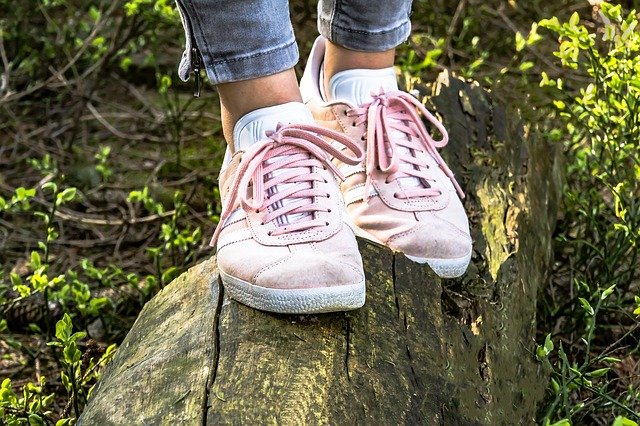
A peculiar thing happened on the way to 2026’s sneaker wars: a silhouette from 1972 quietly won. The Nike Moon Shoe — originally designed by Nike co-founder Bill Bowerman for the 1972 Olympic trials, distinguished by its waffle-sole outsole created in a waffle iron — has re-emerged as the year’s defining footwear phenomenon, propelled by a collaboration with Jacquemus, a wave of celebrity sightings, and a broader cultural shift toward retro running silhouettes that shows no signs of slowing. Vogue recently declared it the Samba of 2026, and the comparison is apt: like the Adidas Samba before it, the Moon Shoe occupies the sweet spot between fashion credibility, street-level accessibility, and design history.
The trend carries broader implications for how sneakers function within fashion cycles. The Moon Shoe’s ascent mirrors that of the Samba: a heritage silhouette rediscovered by tastemakers, amplified by a strategic collaboration, and ultimately absorbed into the mainstream wardrobe. But where the Samba’s rise was driven primarily by the terrace-style and indie-sleaze revivals, the Moon Shoe speaks to a different cultural mood — one that values lightness, movement, and a connection to athletic provenance. If the chunky sneaker was about comfort as armor, the Moon Shoe suggests a generation ready to run again.
The sneaker’s resurgence began quietly in early 2024, when vintage Moon Shoe models started appearing on vintage sneaker accounts and niche resale platforms, driven by collectors who appreciated its place in running history. The silhouette — a low-profile runner with a nylon-and-suede upper, a pronounced heel counter, and that unmistakable waffle sole — diverged sharply from the chunky dad-shoe aesthetic that dominated sneaker fashion through 2022 and 2023. Where the chunky silhouette erased the foot, the Moon Shoe revealed it: sleek, close to the ground, almost minimalist in its proportions. It was, in retrospect, the perfect form for the shifting mood of 2025, as fashion began to tire of exaggerated volume and look for something more refined.
Nike, for its part, has been careful not to over-saturate. Unlike some heritage styles that are reissued in seasonal color waves until the magic dissipates, the Moon Shoe has been released in controlled drops, with the Jacquemus collaboration treated as a flagship moment rather than a volume play. The brand has also positioned the shoe within its broader heritage narrative — the Moon Shoe is one of the few original designs that dates to Nike’s founding era, giving it a mythic quality that newer silhouettes cannot replicate. Whether Nike can sustain the momentum through 2027 without exhausting the style’s novelty is the open question. For now, the Moon Shoe is enjoying its moment as the sneaker that reconciled fashion and function without sacrificing either.
The Jacquemus collaboration supercharged that organic momentum. When Simon Porte Jacquemus showed his iteration of the Moon Shoe — in cream, baby pink, and brown, with a lowered profile and exaggerated Swoosh — during his Spring 2026 presentation, the response was immediate. The shoes sold out within hours of their March 2026 release, and secondary market prices multiplied fourfold. By June, the Moon Shoe had become a near-universal presence on the fashion week circuit, spotted on editors in Paris, buyers in Milan, and artists in New York. Its versatility — equally compelling with wide-leg trousers, midi skirts, or tailored shorts — made it the rare sneaker that worked across style tribes rather than within one.