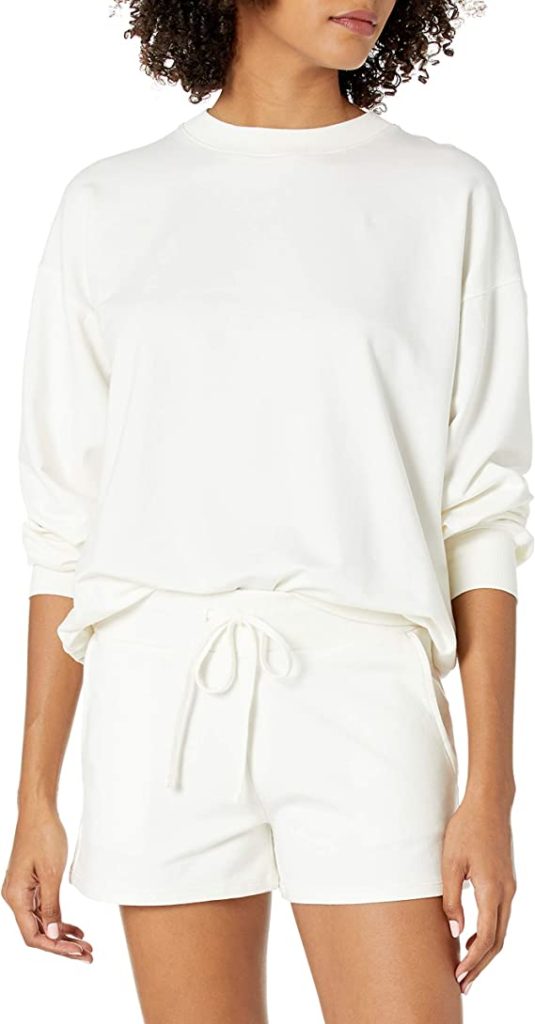
A bishop sleeve is a long sleeve that is cut full — often very full — through the forearm and gathered at the wrist into a cuff or band, creating a dramatic, balloon-like silhouette that tapers sharply at the hand. Named for its resemblance to the wide, flowing sleeves of ecclesiastical vestments worn by bishops in the Roman Catholic and Anglican traditions, it is a style that has cycled through fashion for centuries, resurfacing in every era that values volume, romance, and a touch of the theatrical.
The sleeve’s origins lie in ecclesiastical dress — the liturgical vestments worn by clergy from the early Middle Ages onward featured wide, floor-sweeping sleeves known as chimères, which were practical for the rituals of the altar. When secular fashion appropriated the silhouette in the Renaissance, it became a marker of wealth: the more fabric a sleeve consumed, the more expensive the garment, and the less physically demanding the wearer’s life. Bishop sleeves appeared in the portraits of Elizabeth I, in the sleeves of Dutch burgher wives painted by Rembrandt, and in the court dress of Louis XIV’s France, where volume in the sleeve was directly proportional to social standing.
In contemporary fashion, the bishop sleeve appears across a wide range of garments — blouses, dresses, coats, even knitwear. Designers such as Erdem, Simone Rocha, and Molly Goddard have made it a signature, using the sleeve’s inherent romanticism to counterbalance more austere or minimal silhouettes. The bishop sleeve works because it is fundamentally optimistic: it adds volume without adding weight, drama without structure, and a sense of occasion to even the simplest garment.
Structurally, the bishop sleeve is relatively simple to construct: it is essentially a rectangular or slightly tapered panel of fabric, gathered at the wrist into a cuff or elastic band, with the fullness distributed through the forearm by a series of small pleats or gathers at the cuff opening. The sleeve head — where it attaches to the armhole — may be set in or cut as part of a raglan silhouette, depending on the desired ease of movement. The dramatic effect depends on two variables: the width of the sleeve panel (which determines how much fabric balloons) and the tightness of the cuff (which determines how abruptly the fullness is controlled).
The bishop sleeve re-emerged in the Romantic period of the 1830s, when silhouettes expanded to exaggerated proportions — enormous leg-of-mutton sleeves at the shoulder gave way to bishop sleeves at the wrist, creating a silhouette that was wide at both ends and narrow in between. It returned again in the 1970s, when the era’s enthusiasm for historical and folkloric dress — the Victorian revival, the Edwardian revival, the prairie dress — brought bishop sleeves into mainstream ready-to-wear.