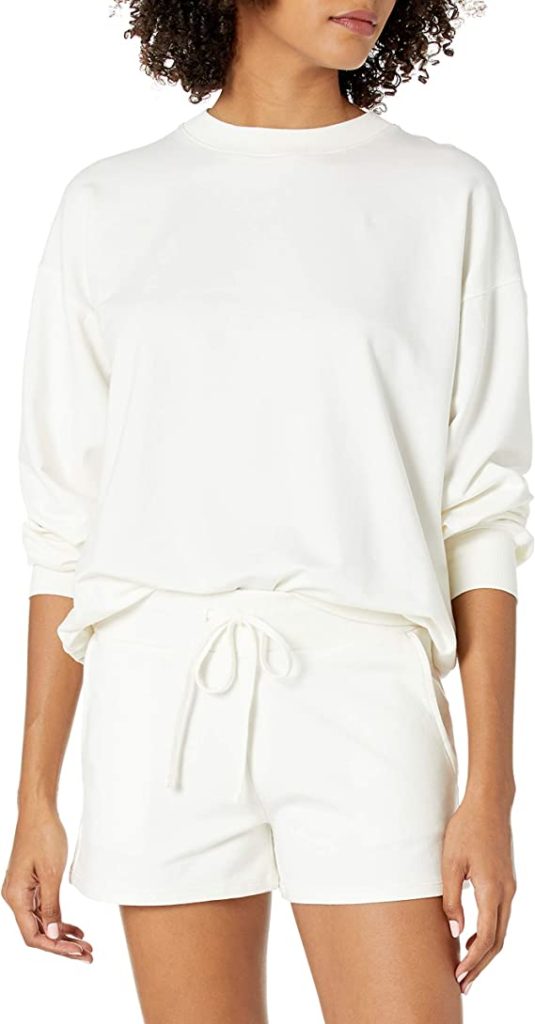
A paletot is a coat designed to fall cleanly — a loose-fitting, hip-length overcoat that rejects the fitted waist in favor of a straight, unbroken line from shoulder to hem.
The paletot emerged in mid-nineteenth-century France as a relaxed alternative to the tightly fitted frock coat and the formal redingote. Its defining characteristics were freedom of movement and simplicity of construction — a coat that hung from the shoulders without waist seam or tailoring at the midsection, allowing the fabric to fall in a continuous vertical plane. The name derives from the French paletot, meaning a short overcoat, and the garment was originally worn by men as a casual alternative to court dress.
By the 1860s, the paletot had been adopted into women’s fashion as a practical outer garment for the increasingly active lifestyle of the urban bourgeoisie. It was particularly popular among dress reformers who advocated for greater freedom in women’s clothing, offering an alternative to the cinched waist and voluminous skirts of mainstream fashion. The paletot’s straight line and minimal ornamentation read as progressive, even radical, in an era of maximal silhouette.
The paletot experienced a significant revival in the early twentieth century, when Coco Chanel adapted its clean lines for her early sportswear-inspired collections. Chanel’s cardigan jacket — loose, unbelted, falling straight from the shoulder — is a direct descendant of the paletot’s anti-corseted logic. In the 1920s, the paletot silhouette became the foundation of the garçonne look: a straight, hip-length coat worn over an equally straight dress, the entire ensemble rejecting the curves that had dominated fashion for centuries.
Today, the paletot survives as a staple of minimalist tailoring. The classic boyfriend coat, the straight overcoat of Japanese design houses, the unstructured blazers of contemporary Italian tailoring — all carry the paletot’s DNA. It is a garment defined by what it refuses: it will not pinch the waist, will not flare at the hip, will not announce its presence through extrusion. The paletot is the quiet garment in a noisy wardrobe, proof that a coat can command attention through restraint rather than volume.