Draping — also known as working on the stand — is a technique of garment construction in which fabric is pinned, pleated, and shaped directly on a three-dimensional dress form rather than being cut from a flat pattern. It is the closest analogue in fashion to sculpture: the designer or pattern-maker works with the fabric’s natural behaviour — its grain, its weight, its bias — to create a silhouette that emerges from the material itself rather than from a two-dimensional drawing.
Draping differs fundamentally from flat pattern-making. In flat pattern, a designer drafts a garment from measurements, cuts it in muslin, and adjusts it on a form. The process is two-dimensional made three-dimensional. Draping works in reverse: the fabric is applied directly to the form, the silhouette is developed in real time, and only then is the shape transferred to paper for reproduction. This gives draping a fluidity and spontaneity that flat pattern rarely achieves — the ability to respond to how a fabric actually behaves, rather than imposing a pre-determined shape onto it.
For the home sewer or student, learning to drape is often described as a rite of passage. It forces an understanding of fabric grain, of how tension and release shape a garment, of the relationship between a two-dimensional textile and a three-dimensional body. A well-draped garment has a quality that is difficult to replicate by flat pattern: a sense that the fabric has been persuaded, not forced, into its final shape.
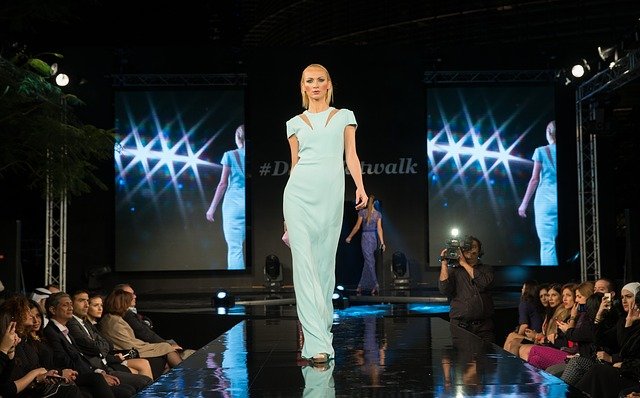
In contemporary fashion, draping is most closely associated with couture and high-end ready-to-wear. Designers such as Madame Grès, who created her iconic pleated gowns through meticulous draping of silk jersey, and Issey Miyake, whose innovative pleating techniques began with fabric manipulation on the stand, have demonstrated that draping is not merely a construction method but a creative philosophy. More recently, the technique has been embraced by designers like Iris van Herpen, who uses digital draping — simulating fabric behaviour in 3D software — to create forms that would be impossible to achieve by hand.
The technique was elevated to an art form by Madeleine Vionnet in the 1910s and 1920s. Vionnet, a trained couturier who had studied under Jacques Doucet, rejected the rigid corsetry and structured tailoring that defined turn-of-the-century fashion in favour of a method that followed the body’s natural curves. She worked with panels of silk crêpe cut on the bias — a diagonal grain that allows fabric to stretch and cling — pinning them directly onto a miniature dress form until the garment’s architecture emerged from the draping process itself. The results were revolutionary: dresses that moved with the body, that draped across the torso like liquid, that required no fastenings because they were held in place by the tension of the cut alone.