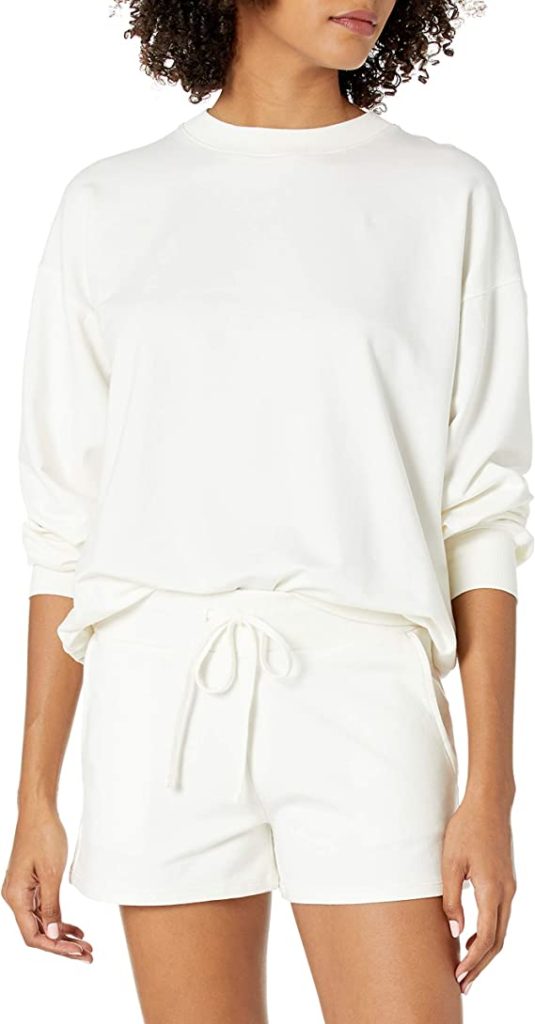
A plush knitted fabric with a soft, velvet-like pile—a textile that combines the warmth and stretch of knit with the luxurious surface of velvet, the weekend sweater pretending to be evening wear.
Velour is produced by knitting a fabric with a looped pile that is then cut or sheared to create a uniform, velvety surface. The knitted base gives velour elasticity and recovery that woven velvet lacks, while the cut pile provides the softness and sheen that are velvet’s signature. Velour is a hybrid: knit and pile, casual and luxe.
Velour entered mainstream fashion in the 1970s as a fabric for tracksuits, the iconic velour warm-up suit worn by athletes and later by celebrities in the 2000s. The Juicy Couture velour tracksuit of the early 2000s became one of the defining garments of the era, a symbol of aspirational leisure that was both comfortable and conspicuous.
Velour’s cultural position is paradoxical. It is a fabric of comfort—soft, stretchy, forgiving—but it is also a fabric of display, its plush surface demanding attention. To wear velour is to inhabit a contradiction: the desire to be comfortable and the desire to be seen. The velour track suit, like the velour dressing gown, is a garment that blurs the boundary between private and public, between the body at rest and the body on display.