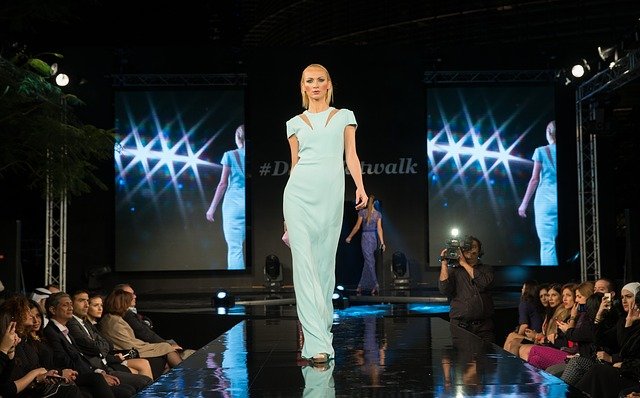
A fabric that has been permanently pleated through a chemical or heat process—a textile whose surface is composed of regular, machine-set folds that give it an accordion-like texture and remarkable elasticity.
Plissé is produced by treating fabric with a caustic soda solution that causes the fibers to shrink in controlled patterns, creating permanent pleats. The process was invented in the early twentieth century and was refined in the 1920s, when designers such as Madeleine Vionnet began using plissé to create dresses that expanded and contracted with the body’s movement.
Plissé was adopted by the fashion houses of the 1930s for evening gowns, where the permanent pleats added a kinetic dimension to the garment: a plissé dress moved with the wearer, its surface rippling and resettling with each step. The fabric’s elasticity made it ideal for bias-cut and body-conscious silhouettes.
In the 1980s, plissé was revived by Japanese designers such as Issey Miyake, who made the technique central to his design philosophy. Miyake’s “Pleats Please” line, launched in 1993, elevated plissé from a fabric treatment to a design system: garments made from permanently pleated polyester that could be crushed, folded, washed, and worn without ironing. Miyake demonstrated that plissé could be not only beautiful but functional, a fabric engineered for the demands of modern life.