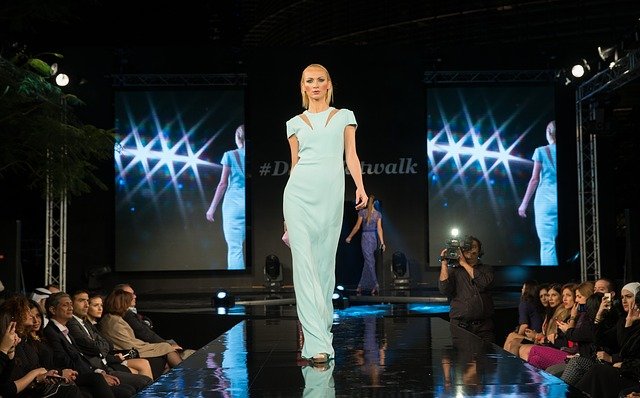
Haute couture is not a genre of clothing. It is a legal status — a protected designation, like Champagne or cognac — that guarantees a specific set of industrial, artisanal, and artistic thresholds have been met. To understand what haute couture is, one must first understand what it demands.
The term itself is French, and its meaning is narrower than English usage suggests. “Haute” translates to high or elevated; “couture” means sewing or dressmaking. But the designation “Haute Couture” is legally controlled by the French Ministry of Industry and administered by the Chambre Syndicale de la Haute Couture, a governing body that dates to 1868. To call oneself a haute couture house, a label must satisfy criteria that are, by design, exclusionary: a Parisian atelier with at least fifteen full-time artisans; a minimum of twenty looks presented twice per year, in January and July; and garments that are made-to-measure, involving multiple fittings, with a degree of hand-finishing that borders on the absurd.
That absurdity is the point. A single haute couture gown can require upwards of 600 hours of labor. Embroidery may be executed by one of the remaining specialist ateliers — Lesage, Lemarié, Montex — each of which preserves techniques passed down through generations: featherwork, pleating, lace-making, beading so dense it transforms the weight of a garment. The construction methods are those of a pre-industrial era: hand-sewn seams, horsehair canvas interfacings, boned bodices that are engineered like fine cabinetry. A couture jacket is not assembled; it is built.
The business model of haute couture is, by conventional logic, irrational. The houses that produce it — Chanel, Dior, Schiaparelli, Valentino, Givenchy, Armani Privé — lose money on their couture divisions. The clientele numbers in the low thousands globally, and each garment is priced far below the cost of its production. The value of haute couture lies elsewhere: in the halo it casts over the house’s ready-to-wear, accessories, beauty, and fragrance lines. A Dior bag sells because Dior is a couture house; the couture validates the commerce.
Culturally, haute couture functions as fashion’s laboratory. Freed from the commercial constraints of retail — no size runs, no sell-through rates, no markdowns — designers use the couture collections to push technique and imagination to extremes. John Galliano’s 1997 Dior collection, inspired by Marcel Proust and the Belle Époque, featured gowns that took over a thousand hours each. Lee McQueen’s final Givenchy collection proposed a hybrid of Japanese armor and Victorian tailoring that could exist only in the couture context. More recently, Daniel Roseberry at Schiaparelli has used couture as a platform for surrealist provocation — trompe-l’oeil bodies, gilded bronze torsos, nose-shaped necklaces — collapsing the boundary between fashion and sculpture.
Haute couture is sometimes dismissed as a relic, a vestige of a class system that no longer exists. But its persistence tells a different story. In an era of fast fashion, algorithmic trend cycles, and disposable clothing, the existence of ateliers where a single sleeve can take three days to construct is a counter-narrative. It represents a refusal to accept efficiency as the highest value. Haute couture is slow, expensive, impractical, and, for that very reason, indispensable — a reminder that clothing can be elevated to the status of art without apology.